I heard a pop in my shoulder and suddenly lost strength while lifting something heavy in Hwagok-dong-how do you decide on the timing for surgery in a case like this?
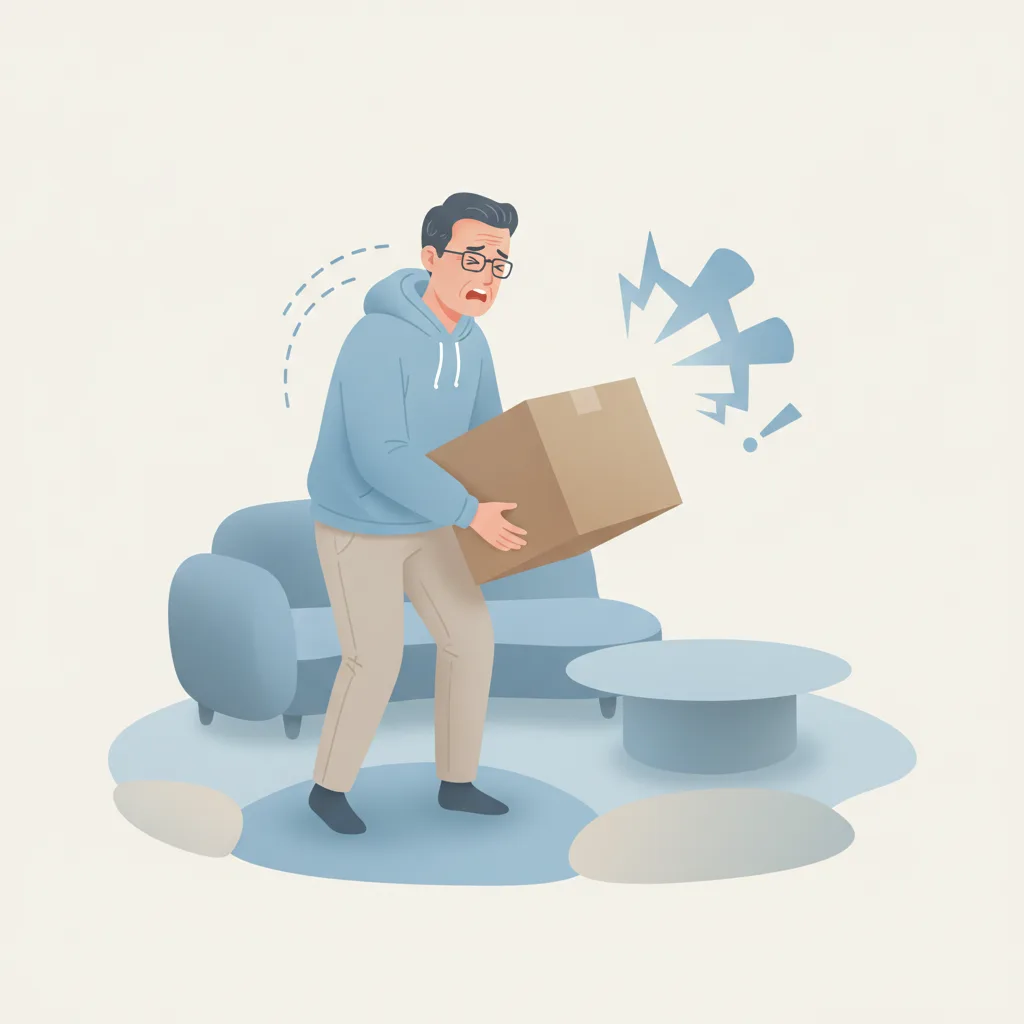
A popping sound inside the shoulder followed by sudden weakness while lifting a heavy object is a classic sign of a complete rotator cuff tear.
Key Answer
To give you the conclusion first: a popping sound accompanied by weakness is not simple muscle soreness — it is a sign that should raise suspicion of a complete tear of the rotator cuff tendon.
At Seoul One Hospital, if MRI confirms a full-thickness (complete) tear, I recommend surgery right away. If it is a partial tear, I try injection treatment two to three times, and if there is no improvement or the tear progresses, I switch to repair surgery at that point.
The key criterion for switching to surgery is not the degree of pain, but whether the weakness persists and whether the tear is progressing.
Questions This Article Answers
- If I hear a pop in my shoulder and lose strength, should I have surgery right away?
- How are partial tears and complete tears treated differently?
- How many times should injection treatment be tried before moving to surgery?
- How is rotator cuff repair surgery performed, and how long does recovery take?
- Can elderly patients still undergo repair surgery?
I am Dr. Yoon-Jong Choi, a board-certified orthopedic surgeon and Director of Seoul One Hospital. In my practice, I often see patients who manage to get through the day but, once the pain intensifies at night, come in belatedly saying, "I heard a pop while moving things earlier today — was that it?"
Most of these patients initially dismissed it as a minor strain, and only came in once their arm wouldn't lift and the weakness never went away. Today I'll explain how I determine whether surgery is needed at this moment.
Why a Pop Plus Weakness First Raises Suspicion of a Rotator Cuff Tear
If you suddenly lose strength along with a popping sound inside the shoulder while lifting a heavy object, this is likely not simple tendinitis-level inflammation but a traumatic rotator cuff tear.
The rotator cuff is a group of four tendons that wrap around the shoulder joint and enable you to lift and rotate your arm. If even one of these is completely torn, the strength to lift the arm itself is lost, and a dull, persistent ache continues even at rest.
The first thing I check during examination is the difference between active and passive range of motion. If the arm can be raised when someone else lifts it but not by the patient's own strength, and the drop arm sign (the inability to slowly lower a raised arm, causing it to suddenly drop) is positive, I strongly suspect a tear.
For imaging, I look at both ultrasound and MRI together. For diagnosing full-thickness tears, MRI has been reported to have a sensitivity of 0.91 and specificity of 0.88, while ultrasound has a sensitivity of 0.87 and specificity of 0.88 (de Jesus 2009, AJR), making it reasonable to screen first with ultrasound and then use MRI to precisely confirm the size and extent of the tear when deciding on surgery. Looking specifically at full-thickness supraspinatus tears, ultrasound alone is fairly accurate, with a sensitivity of 0.88 and specificity of 0.93 (Farooqi 2021).
At Seoul One Hospital, I and a radiologist cross-check the ultrasound and MRI findings together, and decide on surgery based on the size, location, and degree of tendon retraction of the tear.
| Category | Active motion | Passive motion |
|---|---|---|
| Complete (full-thickness) tear | Restricted | Preserved |
| Partial tear | Partially restricted | Preserved |
caption: Classifying tear type by the difference between active and passive range of motion
Why Tears Under 50% Are First Observed with Injection Treatment
If the tear is a partial tear not exceeding 50% of the tendon thickness, I do not move directly to surgery but first observe the course with injection treatment.
Many patients have already received injections for shoulder pain at other hospitals, but what matters is how many times the same treatment has been repeated, and whether the tear has grown larger in the meantime.
My standard is clear. If injection treatment is given two to three times with no effect, or if a follow-up exam confirms the tear has progressed, I switch to surgery at that point. On the other hand, if MRI already confirms a complete (full-thickness) tear, I explain surgery right away without delaying with injections.
This judgment matters because even asymptomatic tears can worsen over time. In a study that followed 50 patients with asymptomatic full-thickness tears for 3 years, 36% developed new symptoms, and in the group that became symptomatic, the tear size and fatty degeneration (a degenerative change in which the muscle around the tendon turns into fat) progressed more significantly (Moosmayer 2013).
However, there are also reports that for patients over 55 with small, non-traumatic tears, the long-term outcomes of non-surgical (conservative) treatment and surgery can be similar (PubMed Central), and for chronic full-thickness tears under 1cm in size, non-surgical treatment can be considered first in the early stages (PubMed). For this reason, I decide by considering age, tear size, and presence of trauma together.
One patient who came to me had been mistakenly diagnosed with shoulder tendinitis for several months and had received repeated injections elsewhere. She said, "The pain continues even with injections, my arm doesn't lift well, and the strength seems to have weakened too," so I ordered an MRI, which showed that the partial tear had progressed significantly. I judged that the stage of managing with injections alone had passed, and moved to repair surgery.
It is not pain but whether muscle weakness persists without recovering even with physiotherapy that is the practical criterion for switching to surgery (PubMed Central).
caption: The flow for deciding to switch to surgery after non-surgical treatment of a partial tear
How Is Arthroscopic Repair Surgery Actually Performed?
If it is a complete tear, or a partial tear that does not improve with injection treatment, I explain shoulder arthroscopic repair surgery.
This surgery is performed through just two to three incisions of about 0.5cm, under general anesthesia or brachial plexus block, and takes about one hour. A 4K ultra-high-definition arthroscopic camera is inserted through the small incisions to directly view the torn tendon while reattaching it to the bone.
Our hospital uses Arthrex's 4K ultra-high-definition arthroscopic equipment (SynergyUHD4) to more clearly check the boundary of the tendon tear and the condition of the tissue while performing the repair.
Recovery proceeds in stages. The patient is immobilized with a brace for 4–6 weeks after surgery, begins passive range-of-motion exercises at 6–12 weeks, enters strength training around 3–4 months, and returns to daily life and light exercise after 6 months. It takes about 3 months for the repaired tendon to reattach to the bone, and most patients can return to daily life around the 6-month mark.
In cases where the tendon tissue itself is weak and repair alone would be unstable, I may also reinforce the tendon with a collagen patch (REGENETEN). This implant is made from collagen fibers derived from bovine Achilles tendon, and is absorbed over about 6 months while an average of about 2mm of new tendon tissue forms, with thickness increase confirmed on MRI at 3 months. In fact, one patient with weak tendon tissue had the repair reinforced with a collagen patch, while another patient whose arthritis had already progressed significantly had the plan changed from repair to joint replacement (arthroplasty) instead. This is why we must look at the condition of the entire joint, not just the tear itself.
Even in elderly patients, if activity level is high and symptoms are severe, I actively recommend surgery. Age itself is not a reason to avoid surgery.
As of August 2024, we have performed over 3,000 shoulder arthroscopic surgeries, and based on this experience, I decide the repair method (simple repair, patch augmentation, double-row repair, etc.) according to the patient's tear extent and tissue condition.
When Is Repair Surgery Not Suitable, and What Are the Warning Signs?
Not every tear is a candidate for repair surgery. There are things that must be checked before surgery.
Self-Check Checklist
- ✓ Does the arm have no strength at all when trying to lift it (persistent weakness)?
- ✓ Can you only sleep in certain positions at night due to pain?
- ✓ Has the lifting strength in your arm failed to return even 2 weeks after the injury?
- ✓ Did swelling and bruising appear immediately after the popping sound in the shoulder?
- ✓ Has there been no improvement even after 2 or more previous injections?
Warning Signs: If the shoulder is accompanied by fever, warmth, and unbearably severe pain, this may not be a rotator cuff tear but an infectious condition such as septic arthritis, requiring immediate emergency care.
Cases Where Repair Surgery Is Not Suitable: If the tendon has been neglected for a long time and has become completely atrophied with severe fatty degeneration, a different reconstruction method, or joint replacement (arthroplasty) in cases with accompanying arthritis, should be considered instead of repair. Such cases can be anticipated in advance from imaging findings.
If warning signs appear, we immediately switch to imaging studies and differential examination to respond.
What Makes Seoul One Hospital's Approach to Rotator Cuff Care Different?
What I pay the most attention to with my patients is explaining the diagnostic process and treatment plan at their level of understanding. Rather than simply stating the name of the condition, I try to show images together so patients can understand why this particular treatment is needed at this particular stage.
Key Summary: Reasons to Choose Seoul One Hospital
- Same-day linked ultrasound and MRI diagnosis: Seoul One Hospital operates a one-stop diagnostic system that screens first with ultrasound and, if needed, precisely confirms the extent of the tear with MRI.
- 4K arthroscopic equipment: Surgery is performed using Arthrex's SynergyUHD4 4K ultra-high-definition equipment, clearly checking the boundary of the tear and the state of the repair.
- Over 3,000 shoulder arthroscopic procedures: As of August 2024, Seoul One Hospital has performed over 3,000 shoulder arthroscopic surgeries.
- Staged rehabilitation design: Recovery stages are explained in advance — brace for 4–6 weeks, passive exercise for 6–12 weeks, and strength training up to 3–4 months — so patients can anticipate their return timeline.
- Collagen patch augmentation option: For cases of weak tendon tissue, we offer the option of reinforcing the repair with a REGENETEN collagen implant.
Why Seoul One Hospital for Rotator Cuff Treatment in Gangseo-gu
When considering rotator cuff treatment in Gangseo-gu and Hwagok-dong, what I consider important is whether the diagnostic accuracy and surgical decision criteria are consistent. If MRI confirms a complete tear, I explain surgery right away; for partial tears, I have clear criteria of two to three injection treatments before deciding based on the course of recovery. I do not vaguely delay by saying "let's just wait and see."
The hospital is a 1-minute walk from Exit 8 of Hwagok Station (Seoul Subway Line 5), making it easily accessible. If surgery is determined to be necessary, a consultation nurse in the counseling room will provide detailed information on costs and admission/discharge procedures. If it is difficult to decide right away, you may discuss further by phone or revisit with a family member for another consultation.
Frequently Asked Questions
My shoulder was fine for a few days after the popping sound, but now it hurts again-is this okay?
It is common for symptoms to temporarily decrease and then worsen again. Early on, it may seem fine as the acute inflammation subsides, but the tendon damage itself often remains, so re-evaluation is needed. If the weakness continues to be felt, I recommend getting an ultrasound examination.
Why do you sometimes recommend surgery even when the pain is not severe?
The degree of pain and the severity of the tear are not proportional. There are cases of complete tears with relatively mild pain, and in these cases, if the weakness is left unaddressed, muscle atrophy can progress further — so earlier surgery actually tends to produce better outcomes.
How long does it take to return to daily life after repair surgery?
It takes about 3 months for the repaired tendon to reattach to the bone, and most patients can return to daily life around the 6-month mark. The average hospital stay is 2 weeks, followed by brace wear and staged rehabilitation exercises.
Who is a better candidate for non-surgical treatment instead of repair surgery?
If the tear is a partial tear under 50% of the tendon thickness and there is no clear muscle weakness aside from pain, the course can first be observed with injection treatment and rehabilitation exercise. However, if there is no improvement after 2–3 treatments or if the tear progresses, we switch to surgery.
Key Takeaways
- If you lose strength along with a popping sound, you should first suspect the possibility of a complete rotator cuff tear.
- If MRI confirms a complete tear, repair surgery is performed without delay.
- For partial tears, effectiveness and progression are re-evaluated based on two to three injection treatments.
- Repair surgery is performed through two to three 0.5cm incisions and takes about one hour, with recovery proceeding through brace → passive exercise → strength training over more than 6 months.
- Severe pain accompanied by fever or warmth may indicate infection and requires immediate medical attention.
I am Dr. Yoon-Jong Choi, board-certified orthopedic surgeon and Director. I completed my orthopedic surgery residency at Severance Hospital, Yonsei University, and a shoulder and elbow fellowship in the Department of Orthopedic Surgery at Ewha Womans University Seoul Hospital. View Profile
Seoul One Hospital is located at Dongmyeong M Building, 179 Gangseo-ro, Gangseo-gu, Seoul, a 1-minute walk from Exit 8 of Hwagok Station (Seoul Subway Line 5). Underground parking (B1-B2) is available at the rear of the building, and if you are hesitant to visit due to shoulder pain, you may first call the main line at 1544-5888 for inquiries. If you continue to feel weakness along with a popping sensation, please do not delay — we recommend starting with an ultrasound examination.