My knee buckled playing soccer in Hwagok-dong, and now it gives way every time I go down stairs-when should I consider reconstruction?
Key Answer
If giving-way on stairs has recurred for weeks after your knee buckled, you should suspect an ACL tear and get evaluated.
With a simple sprain, instability typically decreases within 2–3 weeks. If it doesn't and keeps recurring instead, there's a high likelihood the ligament is completely torn.
At Seoul One Hospital, we review your history, perform a physical exam and MRI to assess the degree of the tear, and then decide on the timing of reconstruction based on your goals for returning to sport and whether there are any accompanying injuries.
Questions This Article Answers
- Why does the feeling of the knee giving way on stairs keep recurring after it buckled?
- How do we confirm this isn't a simple sprain but an ACL tear?
- How do we distinguish cases that need urgent reconstruction from those that can be monitored a bit longer?
- Should I choose an autograft or an allograft?
- What happens if I just tough it out without surgery?
I'm Dr. Young-Min Lee, board-certified orthopedic surgeon and Chief Director of Seoul One Hospital. I often see patients who search online and come in saying, "My knee was fine right after it buckled playing soccer or futsal, but a few days later it keeps giving way on stairs."
What these patients have in common is that the acute pain has subsided, but the instability remains. Let me walk you through where that instability comes from and the criteria I actually use to decide when surgery is needed.
Why Does the Knee Give Way on Stairs?
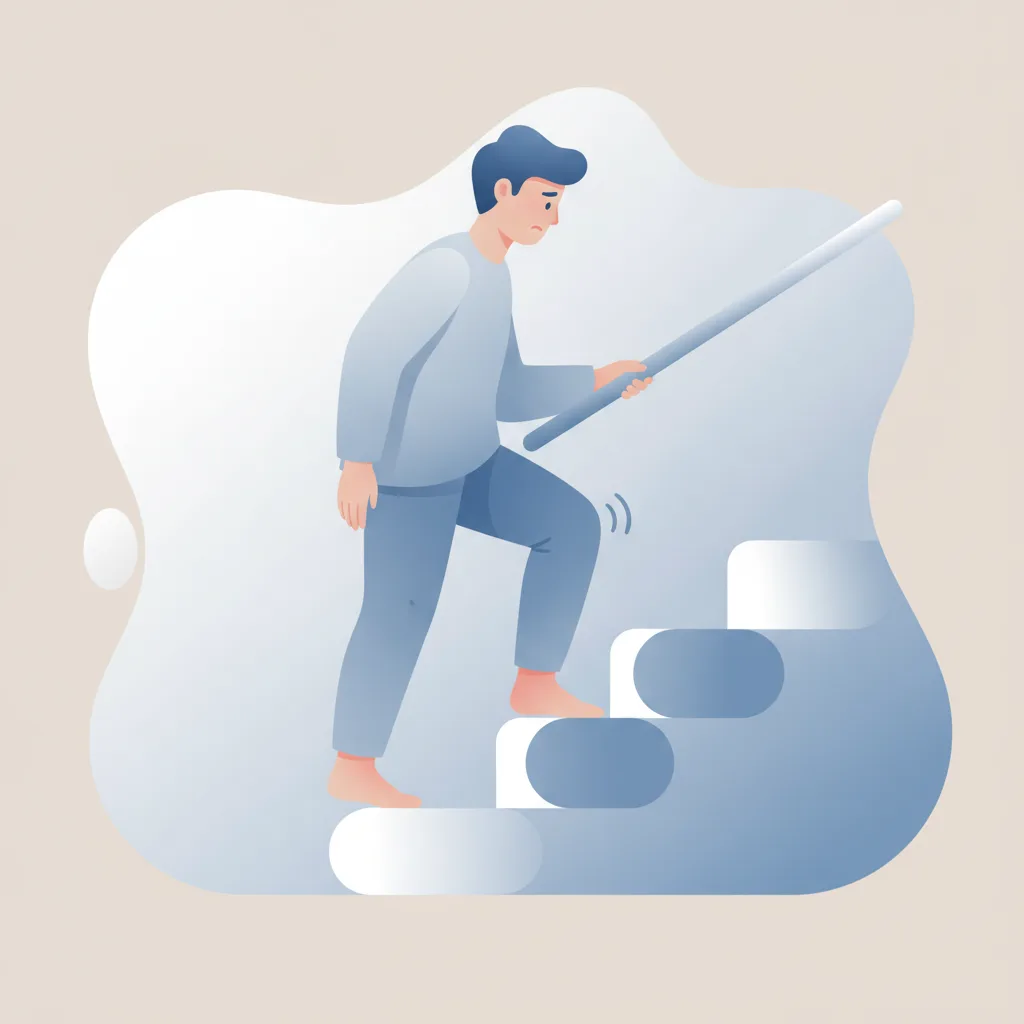
A "giving-way" sensation where the knee suddenly shifts while going down stairs is a classic sign of an ACL tear.
This symptom occurs because the ACL, which normally restrains the shinbone from sliding forward relative to the thighbone, is torn and can no longer provide that function.
Walking on flat ground usually isn't a problem, but the moment you go down stairs or change direction — when rotational force and body weight load the knee simultaneously — you feel the knee suddenly shift out of place.
The fact that this "giving-way" symptom keeps recurring is itself a sign that the ligament can no longer provide stability.
It's also important to know whether you heard or felt a "pop" at the time of injury during sports, whether you could continue playing, and whether there was significant swelling. If none of these occurred and only the front of the knee hurt starting the next day, the chance of serious injury is relatively low. But if there was a pop and difficulty walking, you should consider the possibility of accompanying meniscus or collateral ligament injury.
Diagnosis starts with a physical exam raising suspicion, confirmed by MRI, which has a reported specificity of 90% for diagnosing ACL injury (Li, Sci Rep 2017).
For patients who come to see me, I use MRI to check not only the degree of ligament tear but also whether there is accompanying meniscus or collateral ligament damage. Rotational injuries that twist the knee frequently involve both an ACL tear and a meniscus tear together.
That's why at Seoul One Hospital, after reviewing the MRI, we use arthroscopy to directly examine the inside of the joint when needed, so we don't miss lesions that may not show up on MRI.
Criteria for Timing ACL Reconstruction: Why Delay Is Risky
The timing of reconstruction isn't simply based on "how many weeks have passed" — it's determined by looking together at the degree of the tear, the risk of re-injury, and the patient's goals for returning to sport.
If the tear is complete and instability keeps recurring, the longer it's left untreated, the greater the risk of additional meniscus damage or cartilage wear. The secondary injury rate among patients under 25 who return to sport has been reported at 23% (Wiggins, AJSM 2016, PMID 26772611), which shows that continuing to be active on an unstable knee is itself a risk factor.
On the other hand, for patients with very low activity levels who rarely encounter stairs or direction changes in daily life, monitoring with strengthening rehabilitation and a brace is also an option. Whether to operate should be decided not just by the degree of the tear, but also by weighing the patient's activity level and return-to-sport goals together.
One case I treated was a 42-year-old woman whose knee buckled while landing from a jump in badminton. We initially considered ligament repair, but since repair has been shown to have poor long-term outcomes, we ruled that out first and moved toward reconstruction with precise anatomical placement of the bone tunnels. The reason we chose reconstruction over repair is that using a new graft to recreate the ligament's original attachment points is more favorable for achieving stability than simply suturing the torn fibers back together.
Another case was a 21-year-old man injured during soccer with a "pop," who only came in after the pain had subsided. The lesson from this case is that the disappearance of pain does not mean the ligament has healed. Pain and instability are separate issues, and this patient ultimately underwent allograft reconstruction.
So for patients who have had weeks of giving-way on stairs, I recommend checking the ligament's condition with MRI first, regardless of whether pain is present.
Rate of secondary injury among patients under 25 who returned to sport on an unstable knee · 출처: Wiggins, AJSM 2016, PMID 26772611
Autograft vs. Allograft: Which to Choose
The graft used for reconstruction is chosen between an autograft (the patient's own tendon) and an allograft (a donor tendon), and the principle is to favor autografts for younger patients.
Autograft options include patellar tendon-bone autograft, quadriceps tendon, and hamstring tendon. Allografts have been reported to heal into functioning ligaments more slowly than autografts, and to carry a higher risk of revision surgery, particularly in young, highly active patients (PMC9460090).
My criterion is that autografts should be prioritized for younger patients with a strong desire to return to sport.
Allografts can be appealing since there's no donor-site pain, but without a donor site, the graft takes longer to heal into the patient's own tissue. After reconstruction, the ipsilateral graft re-rupture rate is about 6%, the contralateral knee tear rate is about 8%, and the cumulative re-injury rate is about 20% (PubMed). I explain these figures to patients to show that graft choice is also connected to re-injury risk.
The infection risk from surgery itself is low regardless of graft technique (single-bundle/double-bundle), reported in a Cochrane review as 7/285 for single-bundle and 7/393 for double-bundle (Cochrane).
That's why at Seoul One Hospital, we discuss age, activity level, and return-to-sport goals together, explain the pros and cons of autograft versus allograft, and decide on the graft together with the patient.
| Category | Autograft | Allograft |
|---|---|---|
| Donor-site pain | Present (possible pain at harvest site) | None |
| Graft healing speed | Relatively faster | Slower than autograft |
| Young, highly active patients | Generally recommended | Higher reported risk of revision surgery |
| Surgical infection risk (single-/double-bundle) | 7/285 patients | 7/393 patients |
Limitations and Precautions
Undergoing reconstruction doesn't mean you can return to sport right away — recovery proceeds in stages.
Rehabilitation should not be guided solely by time elapsed since surgery; it's recommended that progression to the next stage be based on meeting criteria such as strength, function, and motor control (PubMed). The Korean Orthopaedic Association also explains that rehabilitation doesn't end simply because surgery was performed — rehabilitation to restore range of motion, strength, and endurance is needed starting right after surgery (Korean Orthopaedic Association).
A study of soccer players reported an average of 3–8 months to return to sport after surgery (PubMed).
Self-Check Checklist
- Does giving-way on stairs keep recurring even 2–3 weeks after your knee buckled?
- Did you hear or feel a "pop" during activity and were unable to continue playing?
- Was there significant swelling at the time of injury?
- Do you feel the knee cannot fully extend or bend?
- Do you have high activity levels with a clear goal of returning to sport?
Warning Signs: If fever, severe pain, and redness accompany the knee, ruling out an infectious condition such as septic arthritis takes priority. This may not be a simple ligament injury, and immediate medical attention is needed.
When This May Not Apply: If activity levels are very low and stairs or direction changes are rarely encountered in daily life, monitoring with strengthening rehabilitation and a brace instead of surgery is also an option. However, this is an exception for cases with notably low activity levels, not the general rule.
If warning signs appear or the decision is unclear, we make the determination based on a combination of MRI and arthroscopic findings.
Seoul One Hospital's Approach to ACL Reconstruction
I personally perform ACL reconstruction and other knee joint surgeries, and before surgery I review MRI findings to assess the condition of the ligament, cartilage, and meniscus together.
When examining inside the joint, I use 4K ultra-high-definition arthroscopy equipment (Arthrex SynergyUHD4) to precisely identify the tear site and any accompanying damage before creating bone tunnels at the anatomically correct position.
The name Seoul One embodies a patient-centered principle that places patients' interests and safety first, and I apply that same standard when deciding on the timing of reconstruction and the choice of graft.
Weekday hours are 09:00–18:00 (lunch break 13:00–14:00), Saturday hours are 09:00–13:00, and the hospital is closed on Sundays and public holidays. I perform surgeries on Mondays, Tuesdays, and Fridays, and see outpatients on Wednesday and Thursday mornings.
For those considering ACL reconstruction near Hwagok Station, the hospital is a 1-minute walk from Exit 8 of Hwagok Station (Seoul Subway Line 5) for easy access, and patients arriving by car can use the underground parking lot at the rear of the building.
Among those researching ACL reconstruction in Gangseo-gu, Seoul, many who look for a hospital in Hwagok-dong, Gangseo-gu, Seoul also worry about the postoperative hospital stay — visitors are limited to one caregiver, and outings require a request form after confirmation from the attending physician.
Frequently Asked Questions
How soon after injury should reconstruction be performed?
There's no fixed date requirement, but if instability recurs for more than 2–3 weeks and a complete tear is confirmed, the longer surgery is delayed, the greater the risk of secondary damage such as to the meniscus. However, if acute swelling is severe, surgery may be postponed until the inflammation subsides.
Why might surgery still be needed even after the pain goes away?
Pain decreases once acute inflammation subsides, but the stability of the ligament itself does not recover. Resolution of pain and resolution of instability are separate issues.
How long does it take to return to sport after surgery?
A study of soccer players reported an average of 3–8 months. Since it takes time for the graft to fully mature into a functioning ligament, there is individual variation, and return to sport is decided in stages based on whether strength and functional criteria are met during rehabilitation.
Who is better suited for autograft versus allograft?
For younger patients with a strong desire to return to sport, I generally favor autografts. Allografts have the advantage of no donor-site pain, but graft healing is slower and the reported risk of revision surgery is higher in younger patients.
Key Takeaways
- If giving-way on stairs recurs for weeks after the knee buckles, an ACL tear should be the first thing ruled out.
- Using MRI to assess the degree of the tear along with any accompanying meniscus or collateral ligament damage is central to diagnosis.
- The timing of reconstruction is determined by weighing the degree of the tear, risk of re-injury, and return-to-sport goals together.
- Graft choice between autograft and allograft is made based on the patient's age and activity level.
- If fever, severe pain, or redness is present, ruling out infectious arthritis takes priority.
About the Medical Team
Dr. Young-Min Lee, Board-certified orthopedic surgeon · Chief Director (completed orthopedic surgery residency at Seoul National University Hospital) — treats ACL reconstruction, corrective osteotomy for bow legs, and joint replacement (arthroplasty). Profile
Hospital Information
Seoul One Hospital is located on floors 6–10 of the Dongmyung M Building, 179 Gangseo-ro, Gangseo-gu, Seoul — a 1-minute walk from Exit 8 of Hwagok Station. Weekday hours are 09:00–18:00 (lunch break 13:00–14:00), Saturday hours are 09:00–13:00, and the hospital is closed on Sundays and public holidays. If you've had knee instability for weeks, we recommend making an appointment and starting with an MRI consultation. Main line: 1544-5888.